What Is SEO?
SEO stands for Search Engine Optimization. It is the process of improving your website so it appears higher in search engine results when people search for topics related to your business.
For example:
- A bakery might want to appear when someone searches “best bakery near me.”
- A clothing brand might want to show up for “affordable summer clothes.”
- A service business might want to rank for “plumber in [city name].”
The higher your website ranks, the more people visit it—and more visitors often means more customers.
Why Is SEO Important for Businesses?
Search Engine Optimization helps businesses in several powerful ways:
- Increases visibility: Your business appears in front of people who are already searching for what you offer.
- Builds trust: Websites that rank higher are often seen as more reliable.
- Drives organic traffic: SEO brings free traffic without paying for ads.
- Improves user experience: Good SEO makes your website faster, clearer, and easier to use.
- Supports long-term growth: Unlike ads, SEO can deliver results for months or years.
No matter the size of your business—small, local, or global—SEO can help you compete online.
How Search Engines Work (Simple Explanation)
Search engines like Google:
- Crawl – Search engines use bots (also called crawlers) to discover new and updated pages on the internet.
- Index – Once a page is discovered, the content is analyzed and stored in a massive database called an index.
- Rank – When a user searches for something, the search engine ranks pages based on relevance, quality, authority, and user experience. SEO focuses on optimizing each of these steps so your website can rank higher.
Key Types of SEO You Should Know
1. On-Page SEO
This focuses on content and elements on your website.
Examples:
- Using relevant keywords
- Writing clear headings
- Optimizing page titles and descriptions
- Creating high-quality content
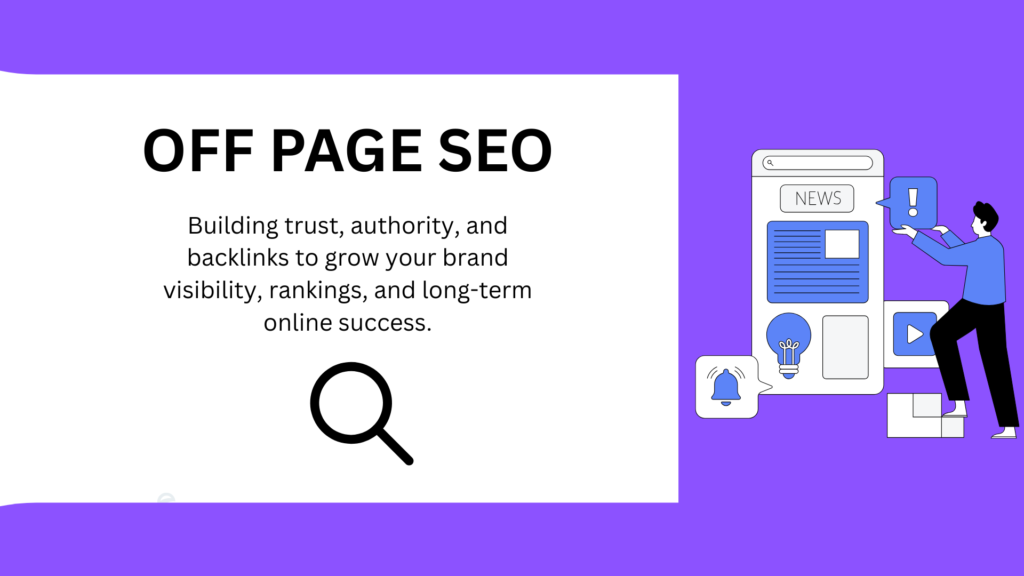
2. Off-Page SEO
This focuses on actions outside your website.
Examples:
- Other websites linking to yours (backlinks)
- Brand mentions online
- Social media sharing
3. Technical SEO
This focuses on how well your website works.
Examples:
- Fast loading speed
- Mobile-friendly design
- Secure website (HTTPS)
- Clean site structure
How to Use SEO in Any Business
1. Understand Your Audience
Think about what your customers are searching for. Ask:
- What problems do they have?
- What questions do they ask?
- What words do they use?
These answers help you choose the right keywords.
2. Choose the Right Keywords
Keywords are words or phrases people type into search engines.
Good keyword tips:
- Use keywords related to your product or service
- Focus on specific phrases
- Include location-based keywords if you serve a local area
3. Create Helpful Content
Search engines prioritize content that helps users.
You can create:
- Blog posts
- How-to guides
- FAQs
- Product or service pages
Make sure your content:
- Answers real questions
- Is easy to read
- Provides value, not just promotion
4. Optimize Your Website Pages
Each page should have:
- A clear page title
- A short meta description
- Headings (H1, H2, H3)
- Keywords used naturally
- Internal links to other pages on your site
5. Make Your Website Mobile-Friendly
Many users search on their phones. A mobile-friendly website improves rankings and user experience.
6. Improve Page Speed
Fast websites rank better and keep visitors engaged. Compress images, remove unnecessary plugins, and use clean design.
7. Build Trust with Backlinks
When other websites link to yours, search engines see your site as more trustworthy.
You can earn backlinks by:
- Writing guest posts
- Sharing valuable content
- Listing your business in online directories
8. Track and Improve
SEO is ongoing. Use tools like Google Analytics and Google Search Console to:
- See which pages perform well
- Find keywords bringing traffic
- Improve pages that aren’t ranking
Common SEO Mistakes to Avoid
- Keyword stuffing
- Duplicate content
- Ignoring technical SEO
- Not optimizing for mobile
- Expecting instant results
- Neglecting content updates
SEO requires patience and consistency.
SEO vs Paid Advertising
|
SEO |
Paid Ads |
|
Long-term results |
Short-term results |
|
Builds trust |
Requires continuous payment |
|
Free organic traffic |
Paid per click |
|
Sustainable growth |
Stops when ads stop |
The best strategy often combines both, but SEO is the foundation.