Top 40 Digital Marketing Interview Questions and Answers
Here are the top 40 digital marketing interview questions and answers that are commonly asked by recruiters in interviews. These questions cover important topics such as SEO, PPC, social media marketing, content marketing, email marketing, analytics, and digital marketing strategies. They are designed to test a candidate’s understanding of key concepts, tools, and performance metrics used in digital marketing. Preparing these questions will help you build strong knowledge of the subject and improve your confidence during interviews. Whether you are a beginner or an experienced professional, these questions can help you understand what employers expect and how to answer effectively in a digital marketing job interview.
Q1. What is digital marketing?
Digital marketing refers to the promotion of products, services, or brands through online channels. These channels include social media platforms, websites, email campaigns, search engines, and other internet-based advertising tools.
Q2. What are the major types of digital marketing?
Digital marketing includes several types such as
- Search engine optimization (SEO)
- Content marketing
- Email marketing
- Social media marketing
- E-commerce marketing.
- Google ads(PPC) and Meta Ads
Each method focuses on reaching customers and promoting products through various online platforms.
Q3. What is the role of search engine optimization (SEO)?
Search Engine Optimization (SEO) is the process of improving a website’s visibility in search engine results pages organically. It involves optimizing website content, structure, and keywords so that the site ranks higher in search results without paying for advertisements.
Q4. What are long-tail keywords?
Long-tail keywords are longer and more specific search phrases that users enter into search engines. Although these keywords usually have lower search volume, they often attract more targeted traffic and lead to higher conversion rates.
Example :
- Best digital marketing course online
- Affordable wedding venue in Ranchi
- Best running shoes for beginners
Q5. What are Short -tail Keywords ?
Short-tail keywords are short and broad search terms that usually contain one or two words. They have a high search volume but are very competitive because many websites try to rank for them.
Example:
- Digital marketing
- SEO
- Shoes
- Mobile phones
Q6. What are Broad Keywords
Broad keywords are general search terms that allow your ads or content to appear for many related searches, even if the exact words are not used.
Example:
Keyword: digital marketing
Your ad may show for:
- online marketing course
- internet marketing tips
- marketing strategies
Q7. What are phrase Keywords
Phrase keywords show results when the exact phrase is included in the search, but other words can appear before or after it.
Example:
Keyword: “digital marketing course”
Your ad may show for:
- best digital marketing course
- digital marketing course online
- digital marketing course near me
But it won’t show for something like marketing digital course because the phrase order changed.
Q8. What are exact keywords
Exact keywords are search terms where the ad or content appears only when someone searches for the exact word or very close variations of it.
It gives more control over who sees your ad.
Example:
Keyword: [digital marketing course]
Your ad may appear for:
- digital marketing course
- digital marketing courses
But it won’t appear for very different searches like:
- best online marketing course
- marketing course for beginners
So, exact keywords target very specific searches with high accuracy.
Q9. What is the difference between on-page SEO and off-page SEO?
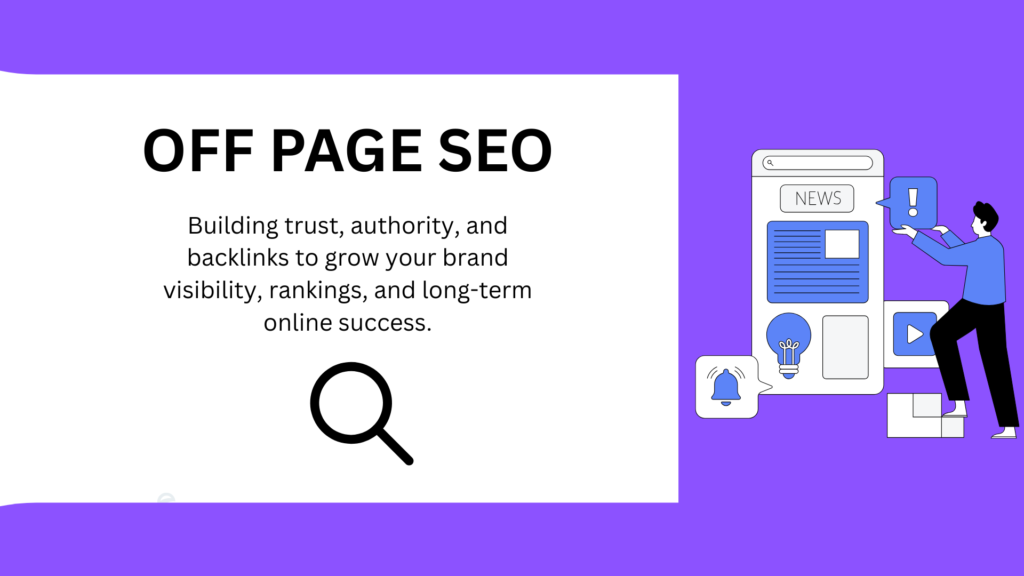
On-page SEO refers to optimization activities performed directly on a website, such as using relevant keywords, improving meta tags, enhancing content quality, and optimizing website structure. Off-page SEO, on the other hand, includes activities carried out outside the website, such as backlink building, social media promotion, and brand mentions that help increase a website’s authority and ranking.
Q10. What are some effective methods for increasing website traffic?
Several strategies can help increase website traffic. These include paid advertising campaigns, promoting content on various platforms, writing compelling headlines, targeting long-tail keywords, and publishing guest posts on reputable websites.
Q11. How do you promote content after it is published?
After publishing content, I promote it through multiple channels. These include sharing it on social media platforms, sending email newsletters to subscribers, and participating in online communities to increase visibility and engagement.
Q12. How would you promote an event through social media?
To promote an event on social media, I would create announcement posts, share engaging visuals and videos, use targeted advertisements, apply relevant hashtags, and retarget potential attendees. Posting updates and engaging with followers also helps increase awareness about the event.
Q13. Do you agree that content marketing helps engage audiences and generate leads?
Yes, I strongly agree with this statement. Content marketing focuses on delivering useful and valuable information to the audience rather than simply promoting products. When brands provide meaningful and informative content, it builds trust, encourages engagement, and helps attract potential customers.
Q14. Explain what a backlink is and why it matters in SEO.
A backlink is created when one website includes a link that directs visitors to another website. Search engines treat these links as signals that the linked content is useful or trustworthy. Websites that receive strong and relevant backlinks often gain higher credibility, which can help them achieve better positions in search engine results.
Q15. How does White Hat SEO differ from Black Hat SEO?
White Hat SEO focuses on optimization methods that respect search engine rules and aim to provide a good experience for users. This approach includes producing informative content, improving website usability, and gaining links naturally from reputable sources.
Black Hat SEO, in contrast, uses deceptive techniques designed to manipulate search engine algorithms. Practices such as overloading pages with keywords, disguising content, or hiding text fall into this category. These strategies may produce quick results but can lead to penalties or a website being removed from search listings.
Q16. What are Meta Ads?
Meta Ads are paid promotional campaigns displayed across platforms owned by Meta, including Facebook, Instagram, Messenger, and the Audience Network.
Q17. What factors influence the performance of Meta Ads?
Several factors impact Meta Ads performance, including audience targeting, ad design, relevance score, bidding strategy, and the quality of the landing page.
Q18. What is the difference between boosted posts and Ads Manager campaigns?
Boosted posts are simple promotions used to increase the reach of existing posts. In contrast, Ads Manager campaigns provide advanced options such as detailed targeting, campaign objectives, and performance analytics.
Q19. What is PPC ?
PPC (Pay-Per-Click) is a type of online advertising model where advertisers pay a fee each time someone clicks on their ad. It is commonly used on platforms like Google Ads, Facebook Ads, and Bing Ads to drive traffic to websites.
Example:
If a business runs a Google ad and someone clicks on it, the advertiser pays a small amount for that click.
Q20. What is the difference between SEO and PPC?
PPC (Pay-Per-Click) is a paid advertising method that generates instant website traffic through ads. SEO focuses on improving organic search rankings and takes more time to deliver results but provides long-term benefits.
Q21. What is ROI in digital marketing?
ROI (Return on Investment) measures the profit generated from a marketing campaign compared to the cost spent on it. It helps marketers understand whether a campaign is profitable or not.
Formula:
ROI = (Revenue – Cost) / Cost × 100
Q22. What is CTR?
CTR (Click-Through Rate) is the percentage of people who click on an ad or link after seeing it. It helps measure how effective an advertisement or campaign is.
Formula:
CTR = (Clicks / Impressions) × 100
Q23. What is CPC?
CPC (Cost Per Click) refers to the amount an advertiser pays each time someone clicks on their advertisement.
Formula:
CPC = Total Ad Cost / Number of Clicks
Q24. What is CPM?
CPM (Cost Per Mille) is the cost paid for 1,000 ad impressions. It is commonly used in display advertising to measure brand visibility.
Q25. What is CPA?
CPA (Cost Per Acquisition) is the amount spent to acquire one customer or conversion through advertising campaigns.
Formula:
CPA = Total Campaign Cost / Number of Conversions
Q26. What is Conversion Rate?
Conversion rate is the percentage of users who complete a desired action such as making a purchase, signing up, or filling out a form.
Formula:
Conversion Rate = (Conversions / Total Visitors) × 100
Q27. What are impressions in digital marketing?
Impressions refer to the number of times an advertisement or content is displayed on a user’s screen, regardless of whether it was clicked or not.
Q28. What is the bounce rate?
Bounce rate is the percentage of visitors who leave a website after viewing only one page without interacting further.
Q29. What is Cost Per Lead (CPL)?
Q30. What is Quality Score in Google Ads?
Quality Score is a rating given by Google based on the relevance of keywords, ads, and landing pages. A higher Quality Score can reduce advertising costs and improve ad ranking.
Q31. Which KPIs are commonly used in digital marketing?
Important digital marketing KPIs include conversion rate, click-through rate (CTR), cost per acquisition (CPA), return on investment (ROI), and organic traffic growth.
Q32. What is the role of Google Analytics in digital marketing?
Google Analytics helps track website performance by analyzing visitor data, including traffic sources, user behavior, session duration, bounce rate, and goal conversions.
Q33. What is the Role of Google Search Console in SEO ?
Google Search Console is a free tool by Google that helps monitor and improve a website’s performance in search results. It allows website owners to track keywords, check indexing status, identify technical issues, and ensure that Google can properly crawl and index their website.
Q34. If website traffic suddenly decreases, how would you identify the problem?
To investigate a sudden drop in traffic:
- Check Google Search Console for possible penalties
- Review traffic sources in Google Analytics
- Examine recent website updates or technical changes
- Analyze backlinks for spam or toxic links
- Evaluate competitors’ performance
Q35. How would you improve a Facebook advertisement that is not performing well?
To improve ad performance:
- Refine the target audience
- Improve visual elements and ad creatives
- Test various different headlines and CTAs through A/B testing
- Adjust campaign budget allocation
- Monitor ad frequency and engagement levels
Q36. What is an automated email campaign?
An email automation campaign consists of pre-scheduled emails that are automatically sent based on user actions or triggers, such as welcome emails for new subscribers or reminders for abandoned shopping carts.
Q37. What is a canonical tag?
A canonical tag tells search engines which version of a webpage is the main or preferred version when multiple pages have similar or duplicate content.
Q38. What is a 404 error page?
A 404 error appears when a requested webpage is not available on the server or cannot be located.. It usually happens when a page is deleted, moved, or the URL is incorrect.
Q39. What is a sitemap?
A sitemap is a file that lists all the important pages of a website to help search engines crawl and index the site more efficiently.
Q40. What is robots.txt?
Robots.txt is a file that tells search engine crawlers which pages or sections of a website they are allowed or not allowed to crawl.
These are the commonly asked top 40 digital marketing questions and amswer that you should remember
FREQUENTLY ASKED QUESTIONS
1. Why should you read these Top 40 Digital Marketing Interview Questions and Answers before an interview?
The Top 40 Digital Marketing Interview Questions and Answers help candidates understand the most frequently asked questions in digital marketing interviews. They cover key topics such as SEO, PPC, social media marketing, and analytics, helping applicants prepare confidently.
2. What are the most important digital marketing skills required for interviews?
Some important skills include knowledge of SEO, social media marketing, Google Ads, content marketing, email marketing, and data analysis. Understanding digital marketing tools and performance metrics is also helpful during interviews.
3. Which tools should a digital marketer know before attending an interview?
Digital marketers should be familiar with tools such as Google Analytics, Google Search Console, Google Ads, SEMrush, Ahrefs, and social media management platforms. These tools help analyze performance and improve marketing campaigns.
4. How can beginners prepare for a digital marketing interview?
Beginners can prepare by learning the basics of SEO, PPC advertising, social media marketing, and content marketing. Practicing interview questions, understanding marketing metrics, and gaining practical experience through projects or internships can also help.
5. What topics are usually covered in these Top 40 Digital Marketing Interview Questions and Answers?
The Top 40 Digital Marketing Interview Questions and Answers usually include topics like SEO fundamentals, Google Ads, social media marketing strategies, email marketing, analytics tools, and key performance metrics used in digital campaigns.