Digital Marketing Tools in 2026: The Ultimate Guide to Growing Your Business Online
In today’s fast-moving digital world, marketing success is no longer about guesswork. It’s about data, automation, creativity, and smart tools. Digital marketing tools help businesses plan campaigns, analyze performance, engage audiences, and increase conversions with precision.
Whether you are a beginner, a freelancer, or a growing business, understanding and using the best digital marketing tools in 2026 can save time, reduce costs, and deliver measurable results.
What Are Digital Marketing Tools?
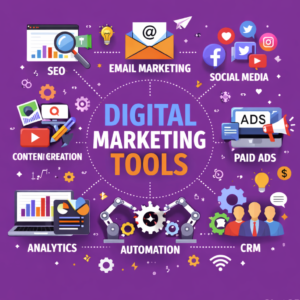
Digital marketing tools are software platforms or applications designed to help marketers manage, optimize, and analyze online marketing activities. These tools support tasks such as SEO, social media marketing, email campaigns, content creation, advertising, analytics, and customer relationship management.
Instead of handling everything manually, marketers rely on tools to automate workflows and make data-driven decisions.
Importance of Digital Marketing Tools
Digital marketing tools play a crucial role in modern marketing strategies because they:
1. Improve campaign efficiency and accuracy
2. Provide real-time performance insights
3. Automate repetitive marketing tasks
4. Help target the right audience
5. Increase return on investment (ROI)
6. Save time and operational costs
Without these tools, scaling a digital marketing strategy becomes extremely difficult.
Categories of Best Digital Marketing Tools in 2026
1. Search Engine Optimization (SEO) Tools
SEO tools help improve a website’s visibility on search engines by analyzing keywords, backlinks, competitors, and technical issues.
Popular SEO tools include:
Google Analytics – Tracks website traffic and user behavior
Google Search Console – Monitors search performance and indexing issues
SEMrush – Keyword research, competitor analysis, and audits
Ahrefs – Backlink analysis and keyword tracking
These tools help businesses rank higher and attract organic traffic.
2. Social Media Marketing Tools
Managing multiple social media platforms manually is time-consuming. Social media tools allow scheduling posts, tracking engagement, and analyzing audience behavior.
Commonly used tools:
Hootsuite – Schedule and monitor social posts
Buffer – Simple and effective post scheduling
Sprout Social – Advanced analytics and reporting
These tools ensure your content looks professional and engaging.
4. Email Marketing Tools
Email marketing remains one of the highest ROI digital marketing channels. Email tools help automate campaigns and personalize communication.
Popular email marketing tools:
Mailchimp – Campaign creation and automation
Sendinblue – Email, SMS, and automation features
ConvertKit – Ideal for bloggers and content creators
These tools help nurture leads and retain customers effectively.
5. Paid Advertising Tools
Advertising platforms help businesses reach targeted audiences through paid campaigns.
Key advertising tools:
Google Ads – Search, display, and video ads
Meta Ads Manager – Social media advertising management
LinkedIn Ads – Professional and B2B targeting
These tools provide detailed targeting and measurable ad performance.
6. Marketing Automation & CRM Tools
Automation tools streamline marketing workflows and manage customer relationships efficiently.
Widely used tools:
HubSpot – All-in-one marketing and sales platform
Zoho CRM – Lead and customer tracking
Salesforce – Advanced CRM for large businesses
These tools help convert leads into loyal customers.
Digital Marketing Tools for Small Businesses and Startups
Small businesses often operate with limited budgets, making digital marketing tools even more valuable. Many platforms offer free or affordable plans with powerful features.
Benefits for small businesses include:
> Low-cost customer acquisition
> Local and niche audience targeting
> Real-time campaign optimization
> Improved brand visibility
> Better customer engagement
With the right tools, even small brands can compete with larger companies in the digital space
How Digital Marketing Tools Improve Customer Experience
Customer experience is a key factor in brand loyalty. Digital marketing tools help businesses understand customer needs and deliver personalized experiences.
They improve customer experience by:
> Delivering relevant content at the right time
> Offering quick responses through chat and automation
> Creating smooth website navigation
> Sending personalized emails and offers
> Tracking customer feedback and behavior
A better experience leads to higher trust, repeat customers, and long-term growth.
Integration of Digital Marketing Tools
One of the biggest advantages of modern tools is integration. Most platforms connect seamlessly with each other to create a unified marketing system.
Examples of integrations include:
> CRM systems linked with email marketing tools
> Social media tools integrated with ad platforms
> E-commerce platforms connected to automation tools
> This integration reduces manual work and ensures data consistency across channels.
How to Choose the Right Marketing Tools
When selecting marketing tools, consider the following factors:
> Business goals and marketing objectives
> Budget and pricing plans
> Ease of use and learning curve
> Integration with existing tools
> Scalability for future growth
> Choosing the right mix of tools is more important than using too many.
Future of Digital Marketing Tools
The future of digital marketing tools is driven by artificial intelligence, automation, and personalization. AI-powered tools are making predictive analytics, chatbots, voice search optimization, and smart content creation more accessible than ever.
Businesses that adopt modern tools early will gain a competitive edge in the digital marketplace.