On Page SEO Optimization: Definition, Importance, and Proven Strategies
Search Engine Optimization (SEO) has become one of the most important aspects of digital marketing. Among the different types of SEO, On Page SEO Optimization plays a crucial role in helping websites rank higher on search engines, attract organic traffic, and improve user experience. In this blog, we will explore what on-page SEO is, why it matters, and the most effective strategies you can use to optimize your website.
What is On Page SEO Optimization?
On Page SEO Optimization refers to the process of optimizing individual web pages to improve their ranking on search engines and earn more relevant traffic. It includes improving the page’s content as well as the underlying HTML code to enhance search engine performance.
Unlike off-page SEO, which focuses on external factors like backlinks, on-page SEO deals with elements that you can control directly on your website, such as:
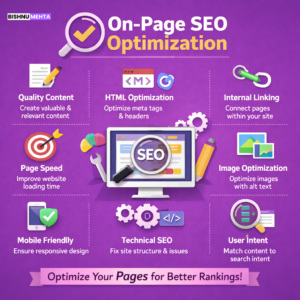
- Content quality
- Title tags
- Meta descriptions
- URL structure
- Internal linking
- Images
- Page speed
- Mobile friendliness
The main goal of on-page SEO is to help search engines understand your content better and deliver it to users who are searching for related topics.
On Page SEO is Importance
On-page SEO is essential because it directly impacts how search engines interpret your website and how users interact with it. Without proper optimization, even high-quality content may struggle to rank well.
1. Helps Search Engines Understand Your Content
Search engines analyze different elements of a page to determine its relevance to a search query. Proper on-page SEO makes it easier for search engines to crawl, index, and rank your content.
2. Improves User Experience
On-page optimization enhances website usability. Well-structured content, fast loading pages, and mobile-friendly designs create a better experience for visitors.
3. Increases Organic Traffic
Well-optimized pages have a better chance of ranking in search engine results. Higher rankings lead to increased visibility and more organic traffic.
4. Builds Website Authority
Consistently optimized pages signal credibility and expertise, which can help establish your website as an authoritative source in your niche.
5. Supports Long-Term SEO Success
On-page SEO forms the foundation of your entire SEO strategy. Without it, off-page efforts like link building may not produce strong results.
Key Elements of On Page SEO
To understand how on-page SEO works, it’s important to know the main elements involved.
1. High-Quality Content
Content is the backbone of on-page SEO. Your content should be:
- Original and unique
- Informative and valuable
- Easy to read
- Relevant to user intent
- Well-structured with headings and subheadings
Search engines prioritize content that genuinely helps users solve their problems or find useful information.
2. Title Tags
The title tag is one of the most important ranking factors in on-page SEO. It appears in search engine results and tells both users and search engines what the page is about.
Best practices for title tags:
- Include your main keyword
- Keep it between 50–60 characters
- Make it clear and engaging
- Avoid keyword stuffing
Example:
On Page SEO Optimization: Complete Guide for Beginners
3. Meta Descriptions
A meta description is a short summary of your webpage displayed in search results. While it may not directly impact rankings, it can improve click-through rates.
Tips for meta descriptions:
- Write compelling and informative descriptions
- Use relevant keywords naturally
- Keep it under 160 characters
- Encourage users to click
4. URL Structure
SEO-friendly URLs help both search engines and users understand your page content.
Good URL practices:
- Keep URLs short and descriptive
- Include primary keywords
- Use hyphens instead of underscores
- Avoid unnecessary numbers or symbols
Example:
yourwebsite.com/on-page-seo-optimization
5. Proper Use of Headings (H1, H2, H3)
Headings organize your content and improve readability.
Best practices:
- Use only one H1 tag per page
- Include keywords in headings
- Use H2 and H3 tags to structure the content logically
This helps search engines understand the hierarchy of information on your page.
6. Keyword Optimization
Keywords are the terms users type into search engines. Proper keyword placement is essential for ranking.
Where to include keywords:
- Title tag
- Headings
- First 100 words of content
- Meta description
- URL
- Image alt text
However, keywords should be used naturally to maintain content quality.
7. Internal Linking
Internal linking refers to linking one page of your website to another, making it easier for search engines to explore your site and encouraging visitors to stay longer.
Benefits of internal linking:
- Improves website navigation
- Distributes page authority
- Increases time spent on the site
- Helps search engines discover new pages
8. Image Optimization
Images make your content more visually attractive, but they must also be properly optimized.
Image optimization includes:
- Using descriptive file names
- Adding alt text
- Compressing images to reduce file size
- Using appropriate formats
Optimized images can also help your content appear in image search results.
9. Mobile Friendliness
A large percentage of users access websites through mobile devices. Search engines prioritize mobile-friendly websites.
To ensure mobile optimization:
- Use responsive design
- Avoid intrusive pop-ups
- Improve loading speed
- Make content easy to read on small screens
10. Page Speed Optimization
Website speed is a major ranking factor and significantly impacts user experience.
Ways to improve page speed:
- Optimize images
- Use browser caching
- Minimize CSS and JavaScript
- Use a reliable hosting service
- Enable compression
Faster page loading encourages users to stay longer and interact more with the site.
Effective On Page SEO Strategies
To get the best results from on-page SEO, you need a well-planned strategy.
1. Focus on Search Intent
Understanding what users are looking for is essential. Your content needs to align with what users are actually searching for.
Types of search intent:
- Informational
- Navigational
- Transactional
- Commercial
Aligning content with search intent improves ranking chances.
2. Create Comprehensive Content
Long-form, detailed content often performs better in search results because it provides more value.
A good SEO article should:
- Answer multiple related questions
- Include examples and explanations
- Be well-structured
- Provide actionable insights
3. Use Semantic Keywords
Semantic keywords are related terms that help search engines understand context.
For example:
If your main keyword is On Page SEO, related keywords might include:
- SEO optimization techniques
- website optimization
- search ranking strategies
- SEO best practices
4. Optimize for Featured Snippets
Featured snippets appear at the top of search results and can drive significant traffic.
To optimize for snippets:
- Answer questions clearly
- Use bullet points and numbered lists
- Include concise definitions
- Structure content properly
5. Regularly Update Content
Search engines prefer fresh and updated content.
Updating content includes:
- Adding new information
- Updating statistics
- Improving readability
- Fixing outdated links
This helps maintain and improve rankings over time.
Common On Page SEO Mistakes to Avoid
Many websites fail to rank because of simple SEO mistakes.
Here are some common errors:
- Keyword stuffing
- Duplicate content
- Ignoring meta tags
- Poor internal linking
- Slow website speed
- Not optimizing for mobile
- Using low-quality content
Avoiding these mistakes can significantly improve your SEO performance.
Future of On Page SEO Optimization
On-page SEO continues to evolve as search engines become smarter. In the future, optimization will focus more on:
- User experience
- High-quality content
- Voice search optimization
- AI-driven search results
- Content relevance and authority
Websites that prioritize value and usability will perform best in search rankings.